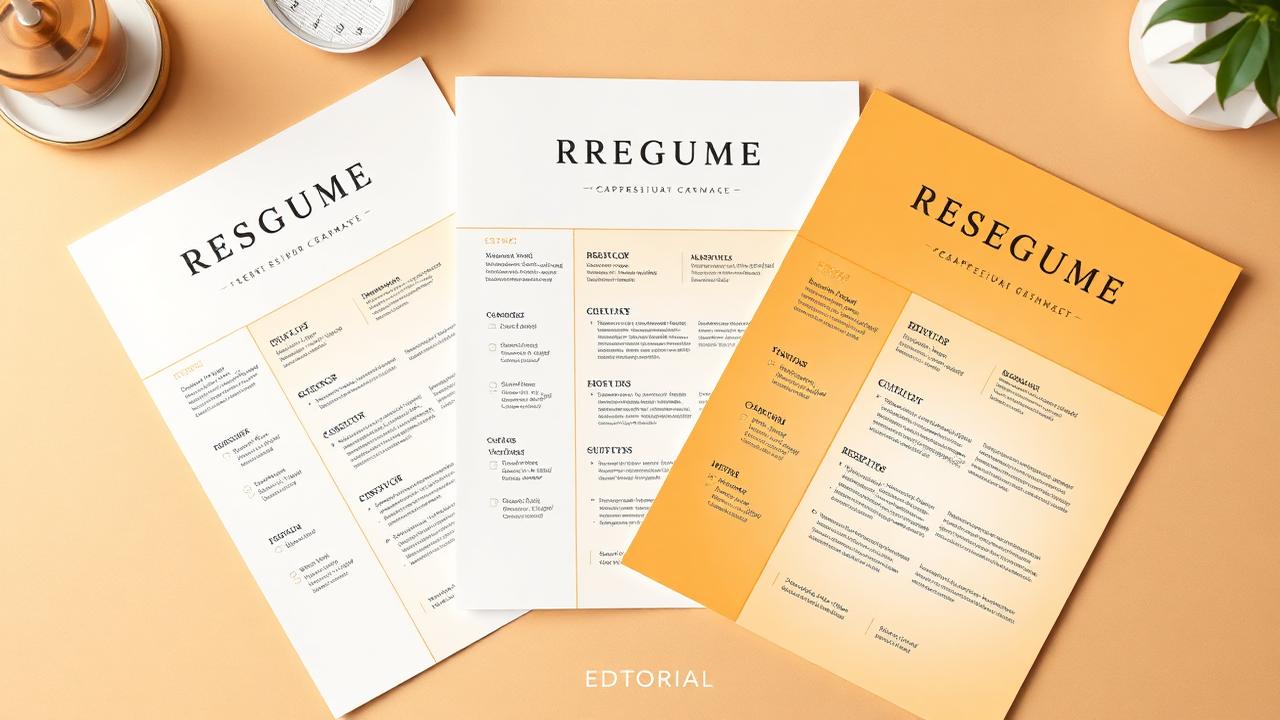
Choosing a resume format isn't just a matter of taste; it's a strategic decision that shapes how an employer sees your career story. In 2026, with most companies relying on tracking systems, a clear and compatible format matters more than ever. Let's compare the three main options.
1. Reverse-Chronological Format
It lists your experience from most recent to oldest and is the most common and most ATS-compatible format. It suits you if you have a steady, progressive career path, because it highlights growth and continuity.
2. Functional Format
It emphasizes skills over chronology and can help those with gaps or a career change. But beware: many systems and recruiters are wary of it because it hides the timeline, so use it carefully.
3. Hybrid Format
It combines both: a strong skills section at the top followed by a chronological experience history. This format is the best choice for most people in 2026 because it surfaces your value quickly while preserving machine compatibility.
Practical rule: when in doubt, choose the hybrid format. It's safe for systems and appealing to humans.
Which Should You Choose?
- Steady, progressive career: reverse-chronological.
- Career change or short gaps: hybrid.
- New graduate with strong skills: hybrid with projects highlighted.
💡 Pro Tip
Try the different formats quickly with the ResumeAce resume builder, and compare which one tells your story best.
✅ Key Takeaways
- 1. Reverse-Chronological Format
- 2. Functional Format
- 3. Hybrid Format
- Which Should You Choose?
Frequently asked questions
Does the functional format really hide employment gaps?+
It may hide them visually, but recruiters notice missing dates and will ask. It's better to address the gap honestly in a hybrid format.
Does the preferred format change every year?+
The fundamentals are stable, but the 2026 trend strongly favors simplicity and system compatibility over complex designs.
Is one page enough?+
For graduates and mid-level professionals, yes. Those with long careers can use two pages without padding.